The deadline to comment on NSF’s proposal to dismantle the National Center for Atmospheric Research is March 13, 2026. Read more here and learn how you can engage.
The National Science Foundation’s National Center for Atmospheric Research (NSF NCAR) plays a key role across weather, water, and climate sciences and services–often behind the scenes. NCAR creates and hosts facilities, partnerships, tech and observational resources, and programs that almost every researcher needs, and which no other organization could maintain on its own. The effect is to advance innovation, support the development of scientists from childhood to retirement, improve how the community works together, and make scientific findings usable and accessible to all. With proposals from the Trump administration to “dismantle” NCAR, members of the AMS community (from researchers to teachers) tell us how the Center has impacted their work and contributed to public benefit.
Life-Saving Research
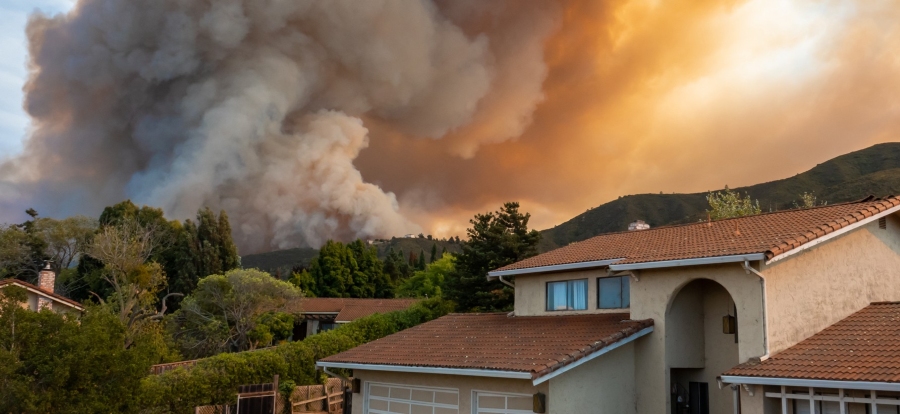
NSF NCAR hosts and supports researchers seeking to understand and predict phenomena like severe storms and hurricanes, atmospheric rivers, agriculturally destructive droughts, wildfires, electronics-disrupting solar storms, and more. Through its own research and the resources it makes available to others in the form of supercomputing power, Earth system models, software, datasets, observing technologies, and more, NCAR is vital to advancing science that keeps decision-makers informed and directly impacts public safety and human health.
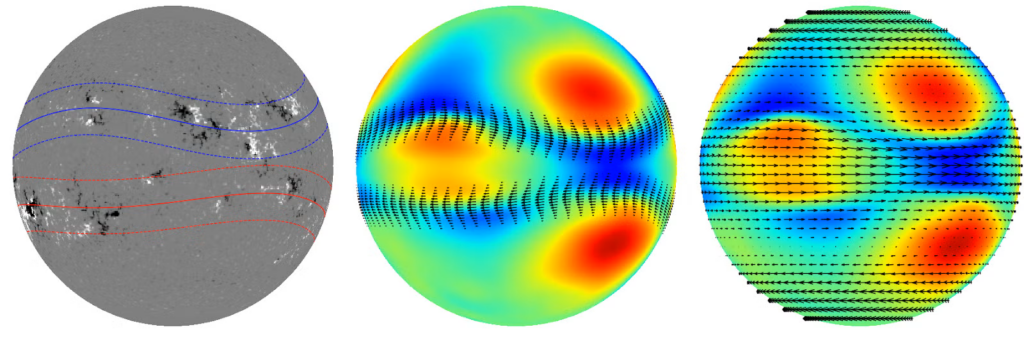
KD Leka, senior research specialist, NorthWest Research Associates
Works on understanding solar magnetic fields, partly in order to help forecast space weather storms.
“My work impacts the safety and integrity of our global electronic and communications infrastructure. I (1) collaborate with NCAR scientists on solar physics: research, data, outcomes, and applications; (2) make use of NCAR scientists’ expertise in validation methodology; (3) attend many seminars, colloquia, and collaborative meetings at NCAR with NCAR scientists but also outside-NCAR scientists who are visiting NCAR from all over the world; and (4) use the data from NCAR-supported and NCAR-designed facilities: ground-, airborne-, and space-based.”
Ryan Torn, professor, University at Albany, SUNY
Researches the predictability of weather systems such as hurricanes, atmospheric rivers, heavy precipitation, and cyclones. The results of this research have been used by NOAA to derive new observation strategies.
“NCAR provides vital services to my research program through observation facilities, access to computing that is designed for atmospheric applications, and expertise for collaboration. I have been a part of multiple field programs that made use of observation facilities that have generated new research on hurricane genesis and severe thunderstorm predictability, which would not be possible without NCAR facilities. The NCAR computing facilities are a gold standard for the field because of the ease of using atmospheric models and software packages, and the support is excellent. This is a force multiplier for the field that enhances the progress of research.
“In addition, I used NCAR computing facilities during the Fall 2025 semester to offer an NWP course to students at the University at Albany and University of Puerto Rico-Mayagüez. Finally, the time I spent at NCAR as a postdoc helped jump-start my career. Working with the world-class scientists there yielded multiple papers and proposals for years to come. Without that expertise, my career would have looked much different.”
Anonymous, former severe weather expert, The Weather Channel, and associate professor, Penn State University
Retired. Previously worked outside NCAR but used its RAP real-time weather maps routinely in research on winter weather and aviation safety.
“I worked with NCAR’s COMET program to help train National Weather Service personnel during their modernization. I worked with the RAP program to help improve understanding and forecasting of aircraft icing. I participated in several field programs in which NCAR facilities were used to improve understanding of microbursts and winter storms. NCAR has played a vital role in the development of Doppler radars and their utilization in weather analysis and forecasting.”
Anastasia Tomanek, graduate research assistant at Colorado State University (CSU, under Russ Schumacher), content manager and training coordinator, Girls Who Chase
Was accepted to the NSF UCAR Significant Opportunities in Atmospheric Research and Science (SOARS) at NCAR’s Mesa Lab prior to starting at CSU, and continues to use NCAR facilities and resources in her research on extreme precipitation forecasting.
“My research at NCAR and CSU has involved extreme precipitation. From looking at the forecast quality of models (operational and experimental), to identifying and understanding the mesoscale ingredients that contribute to such events, this work is inherently valuable to the public and advancements within our science community.
“Now more than ever, we hear of extreme rainfall and flooding events devastating communities, property, and lives. The work being done to improve model forecasts is beneficial to scientists studying how to effectively communicate weather-related risks to the public and to those investigating the atmospheric ingredients behind extreme events. Both research paths are essential to protecting communities and individuals from the devastating impacts so many have already experienced.
“[During my early time with the SOARS program] I grew to love the Colorado Front Range, had the opportunity to visit the CSU Atmospheric Science department, [and] developed my high performance computing skills on the [NCAR] Derecho supercomputer in Cheyenne, Wyoming. Since starting at CSU, I have continued to participate in the SOARS program and execute my thesis research using Derecho and Casper. Each summer, I have worked with the same mentor, which has allowed me to build strong connections and research skills over the years.
“The SOARS team believed in me at a time when scholarship and program acceptances were frequently denied due to my first bachelor’s degree and my identity as an Alaskan Native diaspora adoptee was a source of pain and insecurity. The chance NSF SOARS took on me has led to ample memories and accomplishments. It would be irresponsible and foolish to break down a critical institution that has continued to shape and support strong, capable, and intelligent scientists for decades.”
Supporting Scientists
NCAR’s data sets, colloquia, workshops, trainings, mentorship resources, and financial support help teachers share the wonders of Earth science and equip aspiring researchers–including those with few resources–with opportunities they would not otherwise have.
Robynn Mara, secondary education science teacher, Peoria Unified School District
Uses NCAR resources to facilitate student success in Earth science.
“I use NCAR for current science and data analysis on planetary systems here on Earth to educate our youth about the interconnectedness of Earth’s systems. It aids in my instruction and student understanding of Earth’s current radiative budget, oceanography, weather, climate, and feedbacks. It is essential for students to have access to our planetary health, and NCAR is a huge part of that.”
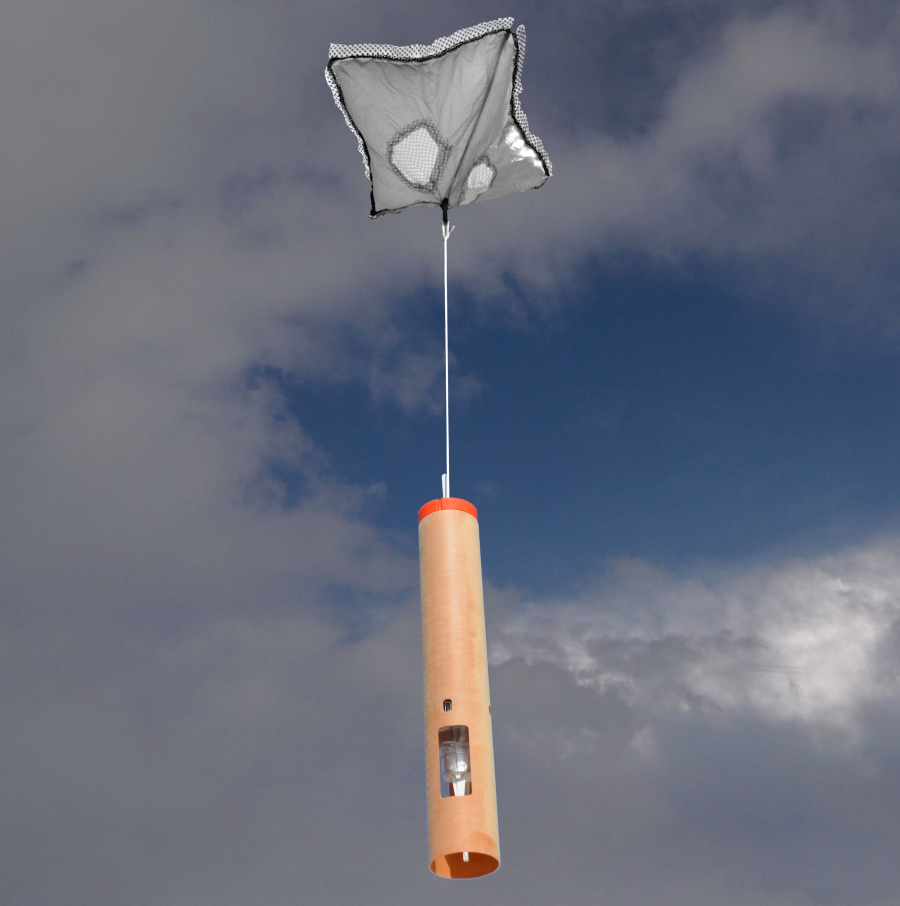
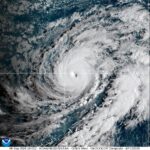
During Hurricane Melissa, an NRD41 dropsonde measured the fastest hurricane wind gust ever recorded (252 MPH). The dropsonde, developed by NSF NCAR and manufactured by Vaisala, was released by a NOAA Hurricane Hunter flight on October 28, 2025. [Photo Credit: Holger Vömel/NSF NCAR]
Agostino Manzato, meteorologist, Osservatorio Meteorologico, Agenzia Regionale per la Protezione dell’Ambiente del Friuli Venezia Giulia (Arpa FVG), Italy
Visited NCAR and attended an NCAR colloquium at the start of his career, with full funding support from NCAR.
“I would have probably not become a researcher at all without the initial help of NCAR! [Now] I’m a researcher in severe storms, and in my career [in a public environmental agency in Italy] I develop many automated tools for forecasting storms, hail, and heavy rain that forecasters use every day in our met service.”
Robin Tanamachi, associate professor, Purdue University
Researches storms and tornadoes as well as how to teach atmospheric science concepts using field work.
“When I took part in the VORTEX2 and VORTEX-Southeast field experiments, NCAR’s Earth Observing Laboratory took stewardship of all of our processed data. These data, and those from hundreds of other field experiments, are now freely available for anyone on Earth to download and analyze. Ensuring data longevity and accessibility is excellent stewardship of taxpayer funds, plain and simple.
“NCAR provides free open-source software that my students and I regularly use, including Cloud Model 1 (CM1, a shockingly easy-to-use idealized NWP model) and Lidar-Radar Open Software Environment (LROSE), including the storied Solo radar display and dealiasing suite. NCAR has also historically provided the atmospheric research community with high-performance computing facilities such as Derecho (and its predecessor, Cheyenne), that my graduate students have availed themselves of.
“… NCAR supported me as a student and as an early-career scientist. I have always tacitly assumed NCAR will also be there to support my own students with their rich portfolio of data, software, instruments, and programs. It sickens me to think NCAR may not be there for them as it was for me.”
Read more from Robin on Substack.
Ensuring Access for All
NCAR’s stewardship of world-class supercomputing, specialized software, and decades of atmospheric data means that taxpayer-funded research remains a permanent, open library that helps keep communities safe and informed.

David Fulker, Board Chair, OpeNDAP, Inc.
OPeNDAP develops, maintains, and advances open-source software relied on by users in crucial weather-related research across the academic, public, and private sectors in all 50 states.
“NCAR offers many datasets in accordance with OPeNDAP’s data access protocol (DAP), and this enables free, remote access to research-quality information by … a large community of data users and providers. … NCAR’s longstanding culture of collaboration has promoted formal and de facto standards for data packaging, transport, and retrieval. The homogenizing effect of DAP—alongside standards set by the Open Geospatial Consortium—has facilitated integrated use of disparate data from multiple sources (as required, e.g., to study how the atmosphere relates to other geophysical, biological, or human-built systems) [as well as] comparisons of similar data from multiple sources (as required, e.g., in model intercomparison, to help quantify confidence levels).”
Want to share your NCAR story with AMS for use in future coverage? Fill out this form.